Quality & Samples
Quality Begins at Origin.Specification Before Shipment. Evidence Before Acceptance.
A commercially successful coffee transaction depends on agreement about what is being purchased and how conformity will be assessed.
The Framework
Ten points of agreement between buyer and origin.
Not every control applies to every transaction. The applicable controls are agreed in writing before execution.
Buyer specification
The requirement is defined first: origin, species, grade, processing, cup profile, screen, moisture, defect parameters, packaging, quantity, destination and shipment window.
Lot identification
Suitable coffee is identified against the specification through farm, cooperative and established supply network relationships.
Representative sample
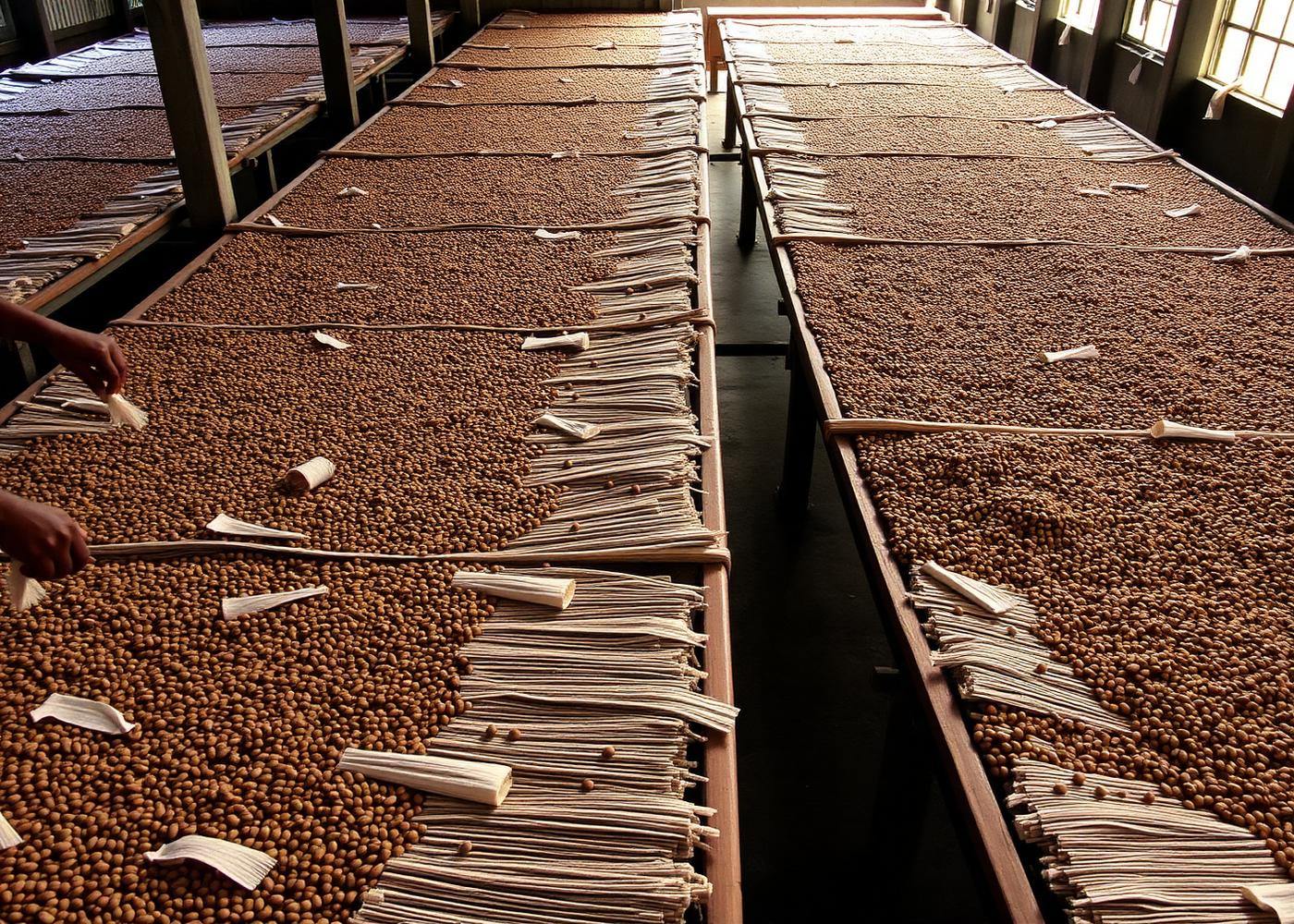
Where a lot is identified, a representative sample can be prepared so the buyer evaluates the coffee actually under discussion.
Buyer evaluation
The buyer assesses the sample against its own internal standards and confirms whether the lot is acceptable.
Moisture analysis
Moisture content is measured and referenced against the agreed contract specification.
Defect assessment
Defect counts are assessed against the parameters recorded in the contract.
Screen verification
Screen-size distribution is verified where screen forms part of the agreed specification.
Cupping
Cup evaluation supports assessment of character and cleanliness, and complements — rather than replaces — physical analysis.
Independent inspection
Where agreed between the parties, independent inspection may be appointed to verify conformity before shipment.
Commercial agreement
Once conformity criteria and commercial terms are agreed, they are documented and the contract is executed.
Request a Sample
Request a Representative Sample.
Send the specification you are evaluating against. Where a suitable lot is identified, Access Noble will advise on sample preparation and the appropriate next step.